What is the fashion designer’s place in the metaverse?

Are you familiar with the term “metaverse”? It was first coined by the author Neal Stephenson in his 1992 science fiction novel Snow Crash, but according to Google Trends it reached its peak among internet searches in April 2021 and seems to be keeping a high score since then. But why is everyone in the fashion industry suddenly interested in the Metaverse?

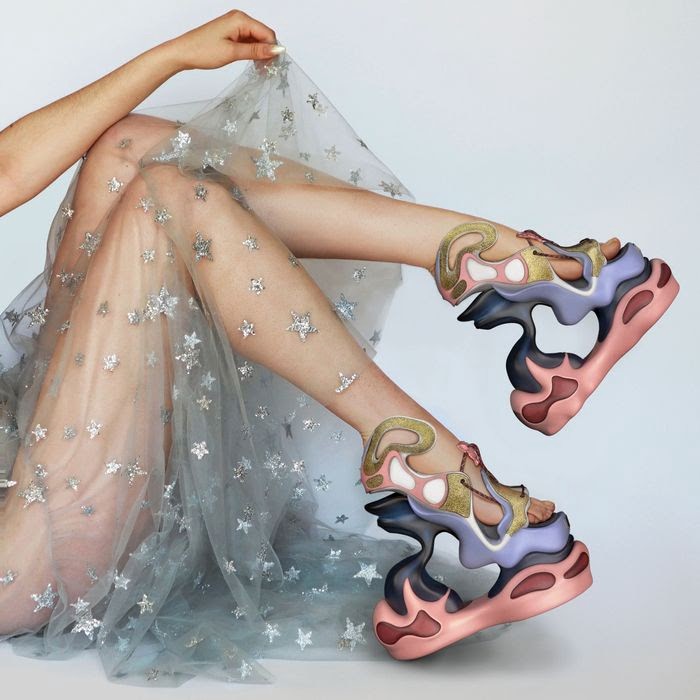
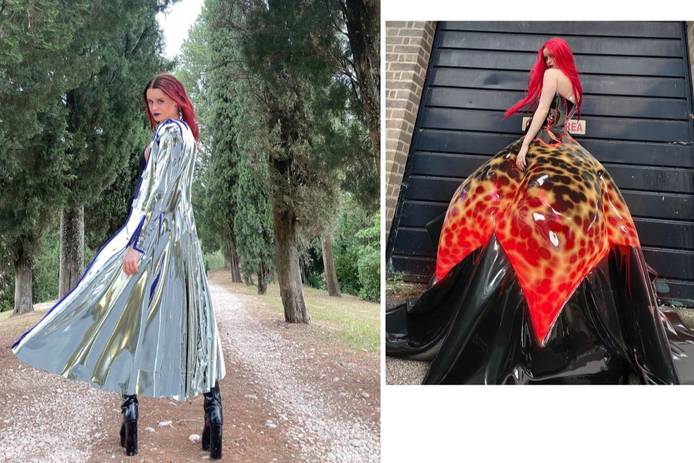
Daniella Loftus, This Outfit Does Not Exist

Are you familiar with the term “metaverse”? It was first coined by the author Neal Stephenson in his 1992 science fiction novel Snow Crash, but according to Google Trends it reached its peak among internet searches in April 2021 and seems to be keeping a high score since then. But why is everyone in the fashion industry suddenly interested in the Metaverse?

Going beyond the obvious race for investment – Epic Games raised $1 Billion in funding last April to support its long-term vision for the Metaverse, which include many market opportunities for fashion brands – there are several unanswered questions about the topic. What will the metaverse mean for the fashion industry? And how will it impact fashion designers?

What is the metaverse?

“It is not gaming”, said Richard Hobbs from BNV, a marketplace for designers and brands to be present in multiple virtual environments. For Hobbs, “the metaverse is anything where a digital asset can be easily transferred across multiple use cases.” Not forgetting that it is open ended and still in its early stages of development.

Even though we already know the metaverse is not gaming, it is a fact that gaming is leading the way. An industry that, in 2020, was worth 152.1 billion dollars, and doesn’t seem to stop growing. Through gaming, people are getting to know the metaverse and making it part of their everyday life.

Fashion merges with gaming

Leslie Holden, co-founder of The Digital Fashion Group, believes in the potential of merging fashion and gaming as a career path for young designers: “In the UK alone there are around 5000 fashion design graduates each year, with limited opportunities for employment. I see the metaverse as opening up new marketplaces, new opportunities, and new occupations for creatives in fashion. We are desperately needing to ensure that there is less waste of fashion talent and the metaverse can supply the answer to a lack of opportunity in the traditional fashion industry “

And Holden continues, “the technology we’re using today to create the metaverse has been developed by the gaming industry, which means that the tools weren’t developed for fashion, and like the development of the metaverse itself, we do need to ensure a joined up approach. Epic Games knows this and they are already investing in fashion, and I see the metaverse as the beginning of a new definition of fashion with purpose, potentially powered by new partners. It can be a fantastic opportunity for fashion designers.”

When it comes to fashion in the metaverse, we are talking about wearability. And as explained by Richard Hobbs, currently if you buy an asset in one metaverse you can not wear it in another, because there is not a single metaverse. There are different metaverses being built by different initiatives. Some of them are owned by companies, some of them are more in the decentralised area. But both have multiple standards, multiple formats and require a single way where you can own something digitally and be able to utilise that. The current emergence of decentralised autonomous organisations facilitate the concept of NFTs and digital asset ownership. And this opened up business opportunities to fashion brands and designers as well.

Fashion designers in the metaverse

Daniella Loftus, from This Outfit Does Not Exist, a platform for digital fashion, believes that designers have a key role at the centre of this new universe: “I see the digital designer’s place as ensuring that we are immersed in the digital world”, said Loftus.

Loftus defines digital fashion in three distinct forms: the first is phygital, digital fashion designed for the aim of producing physical garments. The second form is physical and digital combined, which is digital fashion that can be worn using augmented or virtual reality. And the third is fully digital, which is digital fashion that is sold directly to an avatar. The metaverse is concerned with the last two forms: physical and digital combined, and digital-only.

“If you look at the way we consider fashion in the physical world, it allows us to shape our perceptions of ourselves when we are wearing garments, but also to shape others’ perceptions of us. As we move to the metaverse, you have those functionalities really enhanced. It does not only ensure that you feel a certain way about yourself, or others feel a certain way about you. It is immersing you in that virtual environment and defining the rules of interaction within that environment,” continued Daniella Loftus. In this scenario, designers have a unique place in guiding us to express ourselves, and allowing us to participate in worlds that otherwise would be unfamiliar.

And what skills should designers develop to be this guide for the metaverse? According to Sean Chiles, co-founder of The Digital Fashion Group, “in addition to the digital mindset, fashion designers have to be able to translate the emotions that arise when researching the zeitgeist, and working with physical elements such as fabrics, technical trimmings, etc. This is the connection to the physical. Learning to work with it and blend the real with the unreal, is the primary skill I think that fashion designers need to know how to transition into a new digital reality for the future.”

For Chiles, the new techniques required for digital fashion and 3D design are very similar to bespoke tailoring or couture design where you create an outfit for one customer. “Digitally you can create so many different iterations of a unique asset that there’s going to be a flood of creative output, a flood of creative NFT’s, that can only exist within the metaverse,” he said. This creates a different kind of pressure for the designer, as he concludes, “in the sense of the metaverse and digital fashion design, mastering AI is going to be really interesting as AI can help alleviate this issue.”

Advancements in technologies such as artificial intelligence, and the increased ability of cloud servers to run 3D applications and rapidly render the files created, are all contributing to the expansion of the metaverse. But as Richard Hobbs points out this is open ended and in its early stages.

While the technology is still developing, we can seize the opportunity to consider the best ways to create the right mindset for this new future, understanding the metaverse as a borderless landscape where we can discover new forms of social interaction.

You can get a sneak peak of video here:

By Guest Contributor 5 Sept 2021

This article is a collaboration between The Digital Fashion Group Academy and FashionUnited and it was based on the Webinar “Fashion Design Meets the Metaverse”, hosted by TDFGA in partnership with Parsons N Ventures. Author: Lívia Pinent, Digital Professor for Research at The Digital Fashion Group Academy.

Searches More : https://fashionunited.uk/news/fashion/what-is-the-fashion-designer-s-place-in-the-metaverse/2021090557513


Fashion Week Istanbul

The Embrace of Fashion and Art; FASHION WEEK ISTANBUL PRESENTS ISTANBUL STATE OF MIND EXHIBITION

The Embrace of Fashion and Art; FASHION WEEK ISTANBUL PRESENTS ISTANBUL STATE OF MIND EXHIBITION

14-17 October 2021

A journey from the 1800s to present day Istanbul

With Fashion Week Istanbul presents

Istanbul State of Mind Exhibition

Fashion Week Istanbul presents Istanbul State of Mind exhibition, a special art selection in which different creative disciplines that influence fashion and are influenced by it come together for the first time in Turkey in that sense, will meet with art lovers between 14-17 October as part of Fashion Week Istanbul 2021. Kerimcan Güleryüz is the curator of the exhibition, Merve Tuna is the fashion director of the fashion integration side of the exhibition, Ali Taptık is the Theatrical Director responsible for the selection and performance of the literary texts, and Billur Turan is the Art Director/director of the set design.

Within the scope of Fashion Week Istanbul, Fashion Week Istanbul presents Istanbul State of Mind exhibition is getting ready to feature a special experience to be performed by theatrical artists, a fictive world structured around the ideas of home and street, presenting the collections of Turkish designers at the Likör Fabrikası (Liquor Factory) and Akaretler. While the visitors will bear witness to the “home” life in Istanbul with the special selection of the exhibition, which will be held in Akaretler with the house concept, another fictive world is designed at the Liquor Factory based on the street concept to keep the streets of Istanbul alive from the 1800s to the present day.

The exhibition will feature artworks carrying traces of Istanbul like paintings, photographs, videos and multimedia alongside theatrical and stage performances, and installations. In this project, curated by Kerimcan Güleryüz, the visitors of Fashion Week Istanbul presents Istanbul State of Mind Exhibition will not only witness the life in the city but also explore Istanbul from a different perspective, that of the artists’.

Fashion Week Istanbul presents Istanbul State of Mind Exhibition,
A cross section of an Istanbul Apartment

“An Istanbul Apartment” in Akaretler, designed as part of the Fashion Week Istanbul presents Istanbul State of Mind exhibition, is designed as a multi-layered exhibition. The exhibition, which invites art lovers to the homes of the residents of an Istanbul apartment, is designed by Empire and Onagöre. Presenting the latest products of fashion designers from Turkey in a special art selection, the exhibition brings contemporary artworks and young

theatre performers together with the audience on a same level stage by uniquely interpreting parts from important works of Turkish literature.

Fashion, which is nurtured by the city and its creative industries, will be presented with an original curation that’s far from being a static exhibition as it brings together interactive performances for the first time in the fields of contemporary art, performing arts, design, music and literature based on the concept of home in Akaretler. Curated only by Turkish household names in the fields of the arts, performing arts, design, and literature, the exhibition is also a trailblazer in a sense.

The show on stage can also be deemed as a rehearsal, which the visitors of the exhibition can personally tour as the actors wearing the designs of famous fashion designers at the reading rehearsals will be performing at certain times of the day, every day between October 14-17, in apartments numbered 25 and 27 in Akaretler. Fashion Week Istanbul presents Istanbul State of Mind exhibition, edited by Kerimcan Güleryüz, Billur Turan, Merve Tuna and Onagöre, brings together artists from different branches, today’s visual artists, fashion designers and performance artists.

In the Liquor Factory, designed based on the “street” concept, there is a setup organized in the form of a museum on the upper floor, where artwork on Istanbul are exhibited and on the lower floor, a journey through the streets of Istanbul from the 1800s to the present day is presented. At the entrance of the Liquor Factory, art lovers are greeted by a live painting and special pieces from the designers’ collections in a performative setup.

Fashion Week Istanbul has been supported by the Türkiye Promotion Group for the last 3 seasons and is run by a working group led by IHKIB, which includes representatives of MTD, IMA and IHKIB – that is, representatives from all areas of the fashion industry. FWI, which has shifted to the digital platform due to the pandemic and thus, has brought Turkish fashion design to the global fashion industry much faster and more effectively, has decided to bring the important names of every field touched by fashion to the global platform with a project that has not been realized until now. It is an extraordinary project where we will come together physically with both Turkish and foreign audiences – within the framework of the pandemic rules.

In the exhibition, in which artwork focusing on Istanbul are on display, everyone who is in love with Istanbul will re-embrace Istanbul, not the one they know and love but have forgotten about, an Istanbul that some have never known, but met and fell in love with.

Organized by the Istanbul Apparel Exporters Association (IHKIB), FWI is supported by the Türkiye Promotion Group (TTG) established by the Turkish Exporters Assembly (TIM) under the leadership of the Republic of Turkey Ministry of Trade, and is carried out in cooperation with the Fashion Designers Association (MTD) and the Istanbul Fashion Academy (IMA).

Follow Fashion Week Istanbul!

http://fashionweek.istanbul/

https://www.facebook.com/fwistanbul/

https://www.instagram.com/fwistanbul/

@fwistanbul

Contact:

EFFECT BCW fashionweekistanbul@effect.com.tr

Artists & DesignersDownload ArtistsDownload Designers

Latest digital fashion trends: insights into virtual clothing

Latest digital fashion trends: insights into virtual clothing

Without a doubt, many digital trends have emerged and evolved very fast during COVID-19 pandemic. Also when it comes to digital fashion and virtual clothing. We have investigated the scenarios and new perspective.

Contents

1 The rise of digital fashion: a new era for clothing?

2 Virtual Try-On: putting digital clothes on3 Digital avatars: augmenting our physical reality

3.1 The Gaming industry: fresh and dynamic resources for the digital fashion

3.2 Social media: a challenging opportunity

4 Digital wardrobes: get virtually dressed

5 A more sustainable way?

5.1 Discover more:

https://www.ftaccelerator.it/blog/digital-fashion-virtual-clothing/

Why Digital Clothing is 2021’s Most Exciting Tech Trend

Taylor Ball

Taylor Ball

Imagine a world where your clothes are made of pixels rather than textiles.

One in three women considers a piece of clothing “old” after one or two wears¹.

Fast fashion is popularizing the idea that great style is synonymous with new outfits. Social media reinforces this mentality, with one in six young people claiming they won’t rewear an outfit if it’s been seen online².

Enter digital fashion.

More https://uxplanet.org/why-digital-clothing-is-2021s-most-exciting-tech-trend-64717db6856b

Fashion, luxury and digital innovation: what comes next?

In these turbulent times for the industry, many see digital innovation as a potential saviour – that is why we teamed up with our partner LiveArea to gain more insights for the NetComm Community …

In these turbulent times for the industry, many see digital innovation as a potential saviour – that is why we teamed up with our partner LiveArea to gain more insights for the NetComm Community 
Will customers buy a 60.000$ Rolex by using the same device they buy dog’ food with?That’s the challenge for luxury marketers today.
Innovation in luxury is changing trends, and luxury itself has been (already) transformed by technologies. Augmented reality, data analysis and the implementation of a brand-new user experience in e-commerce: the pandemic has confirmed and accelerated the ongoing trends, some say as much as five years.
Nevertheless, scarcity is a key factor in luxury, and hardly pairs with the web, traditionally perceived as the land of abundance. How are brands supposed to cope with these challenges?
A reputation built over decades is no longer enough to guarantee future success” says Benoit Soucaret, Group Creative Director at LiveArea, an award-winning global customer experience and e-commerce agency.
The problem, Soucaret analyses, is “no one wants to be compared via two webpages online, price for price. Luxury remains an incredibly lucrative market. And, unsurprisingly, its brands remain reluctant to push quickly into e-commerce for fear of eroding the exclusivity of the experience. That has to change”.
Ways of doing so include a mixture of online and offline experiences which, borrowing a fortunate word coined by the Italian philosopher Luciano Floridi, we could call “onlife”.
Data are central in this process, aimed at knowing every single customer and personalizing his visit, be it in a shop or via the web. There are, obviously, legal implications that must be diligently evaluated, above all for business operating in different countries.
Luxury marketing in the 2020s requires the whole value chain to be re-shaped. From production to logistic to sales. And, last but not least, must engage Millenials and Generation Z. How? With their buzzwords: “Mobile, social media, inclusion, sustainability”.
Read the full interview to Benoit Soucaret and get your FREEE eBook

Digital Identity and Garment Journey

Gabriela Hearst has partnered with EON, which is a leading digital identity platform for fashion and apparel – connecting products throughout their lifecycle by unlocking visibility, traceability, and insight through a QR code. The goal is to provide customers with more transparency by sharing the supply chain and giving them access to learn about their garments journey.

One thing is for sure – [fashion] needs transparency. Even for myself, who is passionate about the subject, it was hard to gather this information.” – Gabriela

https://www.gabrielahearst.com/blogs/stories/spring-summer-2020-digital-identity?utm_source=aposto

Fashion Innovation – Top 22 Technologies Creating The Future Of Fashion

by MARTIN SMITH

10 November 2020

When it comes to fashion innovation, consumer adoption, and constant technological development are critical.

As both industries are future-driven and consumer-focused, adoption happens naturally.

But, when it comes to technology, not all developments are suitable for the fashion industry.

From digital influencers to AI and material innovation, are the top 21 fashion innovations of 2020, shaping the future of fashion.

SUSTAINABLE REDESIGN OF THE GLOBAL FASHION SYSTEM


Exploring the Organizational, Technological, and Socio-cultural Dimensions of Transformation 

A SPECIAL ISSUE OF  

SUSTAINABILITY: Science, Practice and Policy (SSPP) 

An Open Access Journal Edited by Taylor and Francis 

DEADLINE FOR EXTENDED ABSTRACT: JANUARY 15, 2021 (750 words) 

Overview

Global fashion, as part of the cultural and creative industries (CCI), represents a rich and advanced manifestation of contemporary culture and simultaneously embodies a complex and layered set of sociotechnical relationships. On one hand, fashion is a sophisticated expression of society widely perceived as a “cultural medium”, and pervading and informing social practices and dynamics. On the other hand, fashion is one of the oldest manufacturing sectors in Western countries, contributing to globalization processes, producing various deleterious effects through concurrent processes of cultural homogenization and impoverishment, as well as deeply affecting the quality of the environment to the point where today it is the second most polluting industry in the world. 

These two dimensions of fashion are currently colliding. The public has begun to demonstrate heightened awareness and new sensibilities have begun to change customers’ attitudes toward consumption choices, thus increasing the demand for transparency on the part of commercially visible brands. 

The COVID-19 pandemic has quickened ongoing transformation and overturned pre-existing commitments. The global fashion system—comprising both its facets of production and consumption along with its negative social and environmental consequences—is being critically questioned even by authoritative figures at the center of some of the most iconic and successful labels. 

Given these circumstances, this Special Issue strives to take advantage of this momentum and to link several disciplinary domains with the objective of exploring the organizational, technological, and sociocultural dimensions of transformation. 

The Special Issue welcome paper proposals addressing the following topics: 

1.   REDESIGNING THE FASHION SYSTEM, focusing on the organizational dimensions of fashion and its systemic transformation.  

2.   INNOVATING FASHION PRODUCTS AND PROCESSES, focusing on innovation and technological transformation of fashion products and processes.  

3.   RESHAPING FASHION CULTURES focusing on the sociocultural dimension of fashion and its transformation towards sustainability.  

DEADLINES 

  • January 15, 2020: Submission of extended abstracts (approximately 750 words)  
  • February 12, 2021: Notification of invited papers  
  • April 16, 2021: Submission of full paper drafts (approximately 8.000 words)  
  • May 21, 2021: Completion of first round of peer review  
  • June 30, 2021: Submission of revised drafts  
  • July 15, 2021: Completion of second round of peer review  
  • September 1, 2021: Submission of final drafts  

How to send the extended abstract proposal: 

Extended abstracts should be sent by January 15 2021 to both Paola Bertola (paola.bertola@polimi.it) and Chiara Colombi (chiara.colombi@polimi.it).  

Subject of the mail: SSPP – SUSTAINABLE REDESIGN OF THE GLOBAL FASHION SYSTEM 

Please indicate in the mail which of the 3 topics your proposal is addressing (see above) 

OPEN ACCESS POLICY FOR THIS ISSUE 

This Special Issue of Sustainability: Science, Practice, and Policy will be an open-source publication and authors of invited papers will be able to participate without the need to pay an author publication fee (APC). All contributions will be sponsored by the Fashion in Process Research Laboratory (FiP) at the Politecnico di Milano which is a neutral platform for knowledge exchange and dissemination. 

Full details on the call are in the attached file

THE FUTURE OF FASHION & HOW WE WILL SHOP IN 2030

THE FUTURE OF FASHION & HOW WE WILL SHOP IN 2030
  • By Shaherazad Umbreen
  • March 30, 2018

MORE BLURRING BETWEEN FASHION AND WEARABLE TECH

Futuristic portrait of a fashion model

Wearable technology has become pretty popular in the last few years. Some products, like FitBit fitness trackers and Apple Watches, have become very popular. Others, like Google Glass, didn’t enjoy such success. One of the things that many people are beginning to note is that wearable tech isn’t always the most fashionable, and often isn’t particularly feminine. Some brands are already starting to address this. For example, Fitbit, one of the leading fitness tracker brands, has the Luxe Collection, so you can turn your Fitbit Flex 2 into a pendant or bangle. As technology and fashion options progress, there will be more wearable tech out there that looks good and does the job it’s designed to do, from fitness trackers to headphones. Tech will also get smaller too, so it will be easy to put tech into almost anything.

3D PRINTING ACCESSORIES AND MORE

3D printing is now cheaper than it has ever been, which makes it possible for almost anyone to own a 3D printer in their home. People use them to be creative and to save money on lots of things too. With a 3D printer, you can potentially find something you want to buy and simply print it out. Experts in tech and fashion are suggesting that in the future, not only will you be able to print things like jewellery and accessories, but you’ll also be able to make your own clothes too. 3D printing is allowing people to create new fabrics with properties like anti-wrinkling too.

Shoes by Shaherazad used 3D printing to create moulds for it’s fine 18 carat gold shoellery.

More : https://www.shaherazad.com/blogs/news/the-future-of-fashion-how-we-will-shop-in-2030

INNOVATIVE SUSTAINABILITY IN TEXTILES

INNOVATIVE SUSTAINABILITY IN TEXTILES

Antonia Sardone – September 6, 2020 – Fashion InnovationSustainabilityTrends

Fashion and Substainability. (Photo Credit: Miss Owl)

DO YOU HAVE A CLEAR FASHION CONSCIENCE?

If you’re like us, you probably spent some of your Covid lockdown time cleaning out your closets (and if you didn’t you should). How many of you have a clear fashion conscience? Was every purchase justified? Or, did you discover that some of the clothes and shoes in your closet you never wore, not even once? Or maybe you wore them only twice? Well, it’s time to take stock of your buying habits and your carbon footprint. To get a clear fashion conscience, next time you’re thinking of making purchase, ask yourself, “am I doing all I could to help”?

THE POLLUTION INDUSTRY

The fashion industry is one of the biggest culprits in causing pollution and damage ing our earth. By 2030, it is predicted that the industry’s water consumption will increase by 50 percent to 118 billion cubic meters (or 31.17 trillion gallons). Its carbon footprint will increase to 2,791 million tons and the amount of waste it creates will hit 148 million tons, according to The Fashion Law website (TFL).

Today more than ever, designers, brands and retailers are looking for ways to reduce their negative impact on the environment. Brands are embracing sustainable cotton initiatives to: reduce water, energy and chemical use; new dyeing technology to reduce water consumption by up to 50 percent; as well as numerous energy and chemical saving schemes throughout the supply chain. In the UK, the result of this work is percolating through to retailers, with a reduction in the carbon and water footprints per ton of clothing of 8 percent and 7 percent respectively since 2012, according to TFL.

Eco Conscious Meets Fashion Conscious. (Photo Credit: Carrygreen)

The movement towards eco fashion is growing quickly. Followers of the movement believe that the fashion industry has an obligation to place environmental, social, and ethical improvements in their practices at every level of the supply chain. One of the goals of sustainable fashion is to create a thriving ecosystem and enriched communities through its activity. Some examples of this include: prolonging the lifecycle of materials; increasing the value of timeless garments; reducing the amount of waste; and reducing the harm to the environment created as a result of producing clothing.

Why Sustainable in Fashion Matters. (Photo Credit: Sustainable Fashion Academy)

Textile designers around the world are looking for innovative techniques to produce fabrics in a sustainable matter. There are a few pioneering companies that are creating innovative textiles, such as biodegradable glitter and fabrics created from seaweed. Here are a few companies that are making a big difference.

ALGIKNIT

The company Algiknit produces textile fibres extracted from kelp, a variety of seaweed. The extrusion process turns the biopolymer mixture into kelp-based thread that can be knitted or 3D printed to minimize waste. The final knitwear is biodegradable and can be dyed with natural pigments in a closed loop cycle.

BIOGLITZ

BioGlitz produces the world’s first biodegradable glitter. Based on a unique biodegradable formula made from eucalyptus tree extract, the eco-glitter is fully biodegradable, compostable and allows for the sustainable consumption of glitter without the environmental damage associated with micro plastics.

FLOCUS

Flocus produces natural yarns, fillings and fabrics made from kapok fibers. The kapok tree can be naturally grown without the use of pesticides and insecticide in arid soil not suitable for agricultural farming, offering a sustainable alternative to high water consumption natural fiber crops such as cotton.

FRUMAT

Frumat uses apples to create a leather-like material. Apple pectin is an industrial waste product which can be used to create sustainable materials that are completely compostable, while still being durable enough to create luxurious accessories. The leathers can be dyed naturally and tanned without chemically intensive techniques.

DRITAN

DriTan is taking sustainable steps towards water-free leather manufacturing. The technology was developed by ECCO Leather and uses the moisture present in the hides as a key step in their tanning process. This innovative technology will change the leather industry and save 25 million liters of water a year. This technique also minimizes the discharge of waste water and the use of chemicals.

MYLO

Mylo is a sustainable leather grown from mycelium, which has its root structure in mushrooms. In nature, mycelium grows underground in soil, forming networks of threads that help recycle organic matter on the forest floor, while providing nutrients to plants and trees. The threads interweave and self-assemble themselves into a 3D matrix that can spread for miles. Bolt Threads Mylo material looks like hand-crafted leather and shares leather’s warm touch and suppleness. Mylo can be produced in days, without the need for animal hides or the toxic chemicals used in the production of synthetic leathers.

RECYCROM

Recycrom is turning waste into colors by building on its “Reduce, Reuse, and Recycle” mission. Recycrom is a patented, sustainable range of synthetic colored dyestuff powders made from 100% recycled textile cotton waste and textile scraps from used clothing and manufacturing waste. The dyes utilize eco-sustainable inputs without using chemical dyes and harming the environment. When dyed using Recycrom colors, the fabrics have a washed-out and natural look that complements today’s current fashion trends. Brands can collaborate with the inventors at Officina+39 to make Recycrom custom dyes using a manufacturers’ own scraps/textile waste.

THE ECO MOVEMENT IS GROWING

While creating sustainable textiles is only one step to creating an eco-friendly brand, it’s refreshing to see so many fashion companies looking for ways to make a global impact on the environment. Stella McCartney has been ahead of the movement and has always produced her collections in an ethical manner. Today fashion brands have plenty of choices to reduce their carbon footprint.

Stella McCartney’s Spring 2020 Ad Campaign. (Photo Credit: Stella McCartney)

https://www.universityoffashion.com/blog/category/fashion-innovation/