
Featured

INNOVATION FASHION DAYS

“Innovation Fashion Days ”

Amateur, Professional, Designers, Models, Stylists,  Freelancers, Students

RUNWAY, DANCE, SHOW, WORKSHOP

New York, London , Paris, Milano, Moscow, Hong Kong, Tokyo, İstanbul, Madrid, Moldova,Kiev,Tallinn,Dubai,Sydney,Houston,Los Angeles,Antalya, Miami, Sao Paulo

CONFIDENCE ● UNIQUENESS ● GENEROSITY ● POISE ● STYLE ● ELEGANCE
d2813124

Innovation Fashion Days  organization that provides programs to empower men, women and girls, boys .

Our purpose is to educate and empower amateur, professional, designers, models, stylists,  freelancers , students by providing them with the tools and resources for success, as well as to provide a strong fashion world.
Innovation Fashion Days  would like to invite your company to become a sponsor in the Innovation Fashion Days at the World of Fashion City 

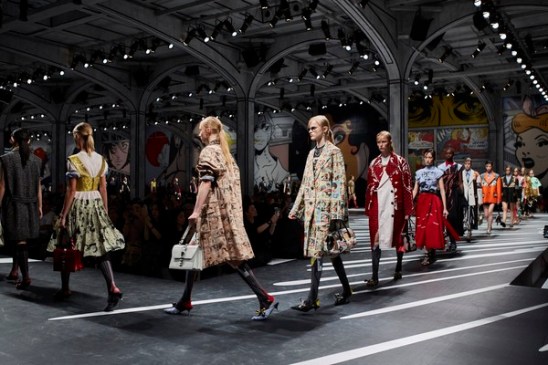
This is an engaging and interactive event intended to entertain and educate the community through fun, show dance, runway,  fashion,  and empowerment.

This event will include a fashion show that provides an entertaining and inspiring demonstration of models showcasing today’s top fashion designs from participating designers. The show will also include choreographed dance performances to enhance the interactivity of the event.

Girls and Boys will express confidence and encourage crowd participation while promoting contemporary trends.

This event is intended to benefit all sponsors in financial increase and community awareness while increasing awareness of our organization and educating attendees of our empowerment programs.

INNOVATION FASHION DAYS

Our events entertain 1000+ audience attendees and vendors annually.

We hope that you consider joining us in our community work by becoming a sponsor in the INNOVATION FASHION DAYS. Together we can make a better world for every people

We thank you in advance and sincerely appreciate the opportunity to work together!
Thank You.

please visit us at social media and contact me at your earliest convenience

Contact 

https://www.instagram.com/zabosmabos/
 

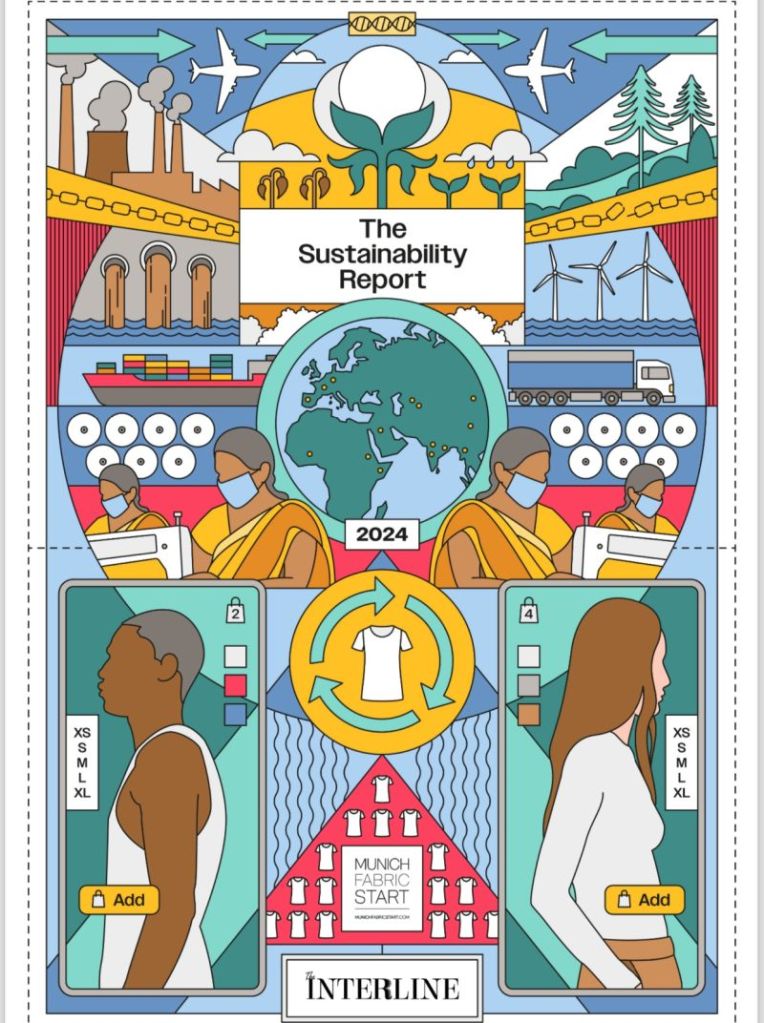
The Sustainability Report 2024 – Available Now

Our second deep-dive report on the evolution of technology for sustainability is now available to download, for free – covering the changing landscape of legislation, the mechanics of traceability, the outlook for skilled workers in a circular value chain, and much more.

Available to download from today, free and un-gated, The Interline’s second Sustainability Report spans 100 pages, featuring exclusive editorial from a range of industry perspectives, detailed technology vendor profiles and executive interviews, and an updated analysis of the market for sustainability solutions in fashion.

This year’s Sustainability Report is supported by Munich Fabric Start, and contains an exclusive foreword and insights from Managing Director, Sebastian Klinder.

Use one of the buttons below to obtain your copy. The “shareable version” will be the best fit for most readers, with a low filesize suitable for sharing with colleagues. This should open in a new browser tab, and can be saved from there. The quality version contains uncompressed images and artwork; it’s intended for offline reading on high-DPI displays, and archival, and should download automatically.

DOWNLOAD – SHAREABLE VERSION (26mb)

DOWNLOAD – QUALITY VERSION (138mb)

Building on the initial thoughts and findings set out in our Sustainability Report 2023, this 2024 edition examines how the definition of sustainability is shifting, and how technology solutions are evolving to meet it. It contains unique stories, told by industry figures, and key insights into how some leading technology companies are building the infrastructure and the experiences that fashion urgently needs.

Those stories include:

  • An examination of the wider industry context, the progress made, and how the narrative around sustainability has shifted in 2024, from our Editor-in-Chief.
  • A spotlight on circularity programmes in a particular niche – football shirts – and what implications these have for the wider fashion industry, from Joanna Czutkowna, CEO of 5Thread.
  • A founder’s first-hand account of why the alternative materials sector has struggled in 2024, and what she believes it will take for material innovation to become mainstream – from Roni Gamzon, Co-Founder and CCO of Biofluff.
  • A look into how the empowerment of supply chain workers can be directly measured in action on sustainability – and why that empowerment is still the exception rather than the rule – from Aasia D’Vaz-Sterling.
  • A detailed view of how fashion’s returns crisis became as severe as it is, and how some of the financial and environmental impacts might be mitigated, from Sylvia Ng, CEO of ReturnBear.
  • An on-the-ground account of how China’s fashion consumption and production trends have developed in 2024, and what that heralds for the rest of the world, by Gemma Williams.
  • A reference guide for the key laws, regulations, and legislations that affect fashion in different territories, by Emma Feldner-Busztin.
  • A call for action on textile-to-textile recycling, and the scale and speed of action necessary to reverse fashion’s growing reliance on new fibres, by Dennis Nobelius, CEO of Syre.
  • An overview of why fashion overproduces, and how policy, technology, and consumer engagement might make a difference, from Darya Badiei Khorsand.
  • A tale of how skilled people who are essential to the linear value chain could fall through the gaps of a circular fashion system – and how fashion can avoid leaving them behind. By Sophie Benson.
  • An examination of the looming talent squeeze in sustainability, from Sanne Schoenmaker.

The Sustainability Report 2024 also contains detailed profiles of some of the key technology players who are defining what the foundations and the frontend experiences of sustainability solutions will be:

  • Hyland – including a conversation with Global Director for the company’s Digital Asset Management Practice, Chad Malley, about the balance between compliance and proactive improvement – and where content can drive action and awareness.
  • Lectra – including an interview with Maximilien Abadie, Chief Strategy and Product Officer, about how CSR and corporate strategies in fashion are aligning, and the role of Industry 4.0 solutions in industrialising sustainable practices.
  • Oritain – including a discussion with Dr. Sam Lind, Science Solution Architect, about the distinction between objective and subjective data, and the role of science in modern, more sustainable sourcing.
  • PTC – featuring an interview Kyle Marden, VP of the company’s Retail Business Unit, about data consolidation, compliance tracking, and how PLM can help drive eco-design.
  • Tradebeyond – featuring a conversation with Michael Hung, CEO, about the role that tangible, practical AI solutions can play in sustainability and risk mitigation.

DOWNLOAD – SHAREABLE VERSION (26mb)

DOWNLOAD – QUALITY VERSION (138mb)

Look for The Interline’s final report for 2024 this December, with the release of The DPC Report 2024 – the next instalment of the definitive series of downloadable reports focused on the cutting edge of 3D tools, workflows, and solutions for fashion and footwear.

Find a full archive of our past reports – including the popular DPC Report 2023, the timely AI Report 2024, and the relevant Sustainability Report 2023 – in our report archives.

The Interline will announce its reports slate for 2025 early in the new year, and we will also continue to cover the industry’s hottest topics in news, interviews, editorials, podcasts, and partnerships all year-round.

Categories: ReportsSourcing And Supply ChainSustainability And CircularityTop Reads

Tags: Archive

What is Fashion Technology?

Fashion technology” is the term used for incorporating technological advancements into the manufacturing and selling of fashion products. This concept has a wide range of applications in the fashion industry, including the sourcing, production, design, and retail processes.

Digital technology is also utilized in fashion technology to minimize waste and support sustainable practices. In addition to physical fashion items, prominent global brands are using Web3 and metaverse platforms to offer virtual fashion products.

The rise of fashion technology has given birth to “fashion tech experts,” who speculate that this trend may eventually form a distinct industry within the fashion sector. However, it is unclear whether this outcome is feasible.

https://fashionunited.com/

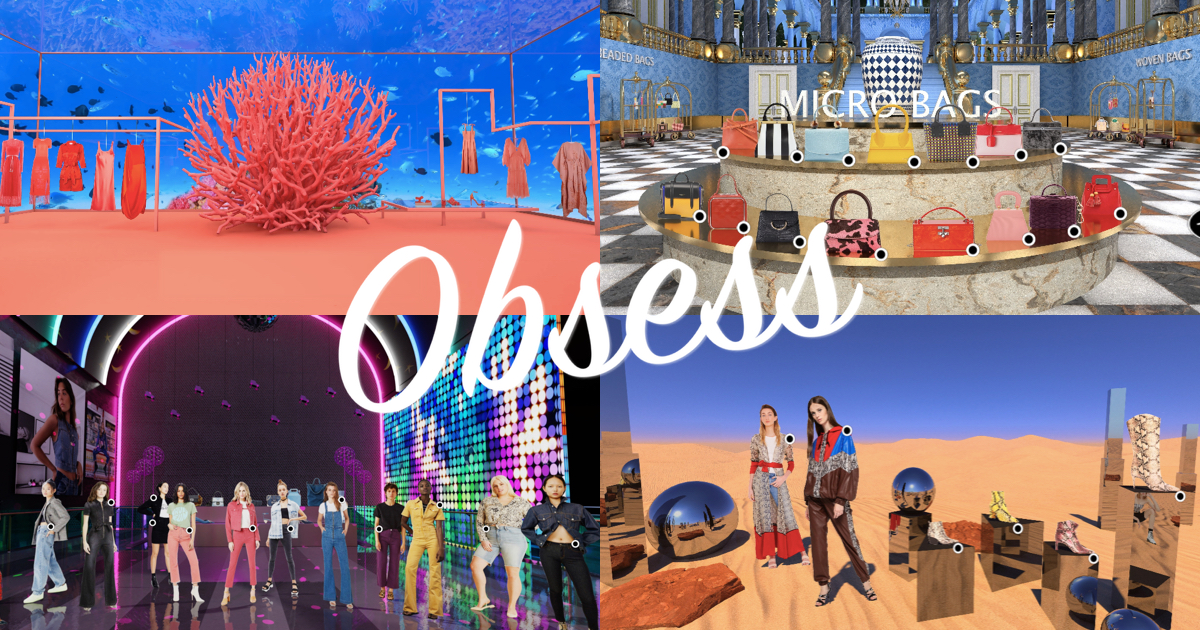
VIRTUAL STORES FOR FASHION BRANDS

Discover how Obsess virtual stores enable the world’s leading fashion brands to reach highly engaged online shoppers at scale.

Virtual Flagship Stores

Create an always-on, immersive virtual store that reinforces innovation, and makes your brand more memorable to consumers over time. Virtual flagships can be refreshed seasonally to align with your brand marketing and merchandising calendars.

VIRTUAL STORES FOR FASHION BRANDS

Meeting The MetaVerse Halfway

The first MetaVerse Fashion Week is over, and depending on your vantage point it was either a roaring success or a dubiously half-baked initial showing for a vision that many brands have placed significant bets on being the Next Big Thing.

Before fashion runs full-speed towards the MetaVerse, there are fundamental challenges to solve – in both virtual and physical worlds.

The first MetaVerse Fashion Week is over, and depending on your vantage point it was either a roaring success or a dubiously half-baked initial showing for a vision that many brands have placed significant bets on being the Next Big Thing.

In terms of brand participation, nobody would argue that MVFW was anything but impressive. Big brands, big department stores, massive music artists, and arguably the biggest virtual landlord (an unwholesome title if ever there was one) were all represented, opening their collective doors to a customer base that seems, on the surface at least, to have transcended the established crypto-centric audience that defined last year’s NFT gold-rush.

Frame the whole affair from that audience’s point of view, though, and the cracks started to show themselves quickly. For an industry that trades heavily in aesthetics, the stylised (read: simplified) art of Decentraland, combined with the fact that the average visitor is probably using an integrated GPU, led to a pretty significant disparity between the level of visual fidelity that consumers want, and what was actually on show.

This is not, notably, intended to disparage the creative work that individual designers, collectives, and studios put into building visual garments. The level of artistry on show was at least on a par with what you’d expect to find in the constantly-impressive world of digital art, grassroots CG, and game character and environment design.

If the fashion corner of the MetaVerse has a problem, it’s definitely not a paucity of talent.

A 28-year-old on Asia’s top metaverse platform makes six figures as a virtual fashion influencer

Facebook, now called Meta, has created a number of images to show how its metaverse might look.

  • Crypto giant Grayscale said the metaverse is a $1 trillion annual revenue opportunity.
  • It comes as pieces of virtual land inside metaverse projects have sold for upwards of $2 million.
  • Grayscale said the metaverse is a big opportunity for the crypto world, with investment accelerating.

The metaverse has the potential to become a $1 trillion annual revenue opportunity across the worlds of advertising, digital events, e-commerce and hardware, according to a new report from crypto giant Grayscale.

Grayscale’s report, released Wednesday night, comes during a surge in interest in the metaverse after Facebook officially changed its name to Meta as it focuses on the virtual immersive world it says is the future of the internet.

This week, there have been early indications of the potential size of the metaverse economy, with parcels of virtual land inside crypto-based metaverses Decentraland and Axie Infinity selling for more than $2 million.

The metaverse refers to a range of online 3D virtual environments, in which people can play games, build things, socialize, work and even trade and earn crypto assets.

The most well-known individual metaverses right now are in gaming, with Fortnite and Roblox booming in popularity over the last few years. Grayscale estimated that revenue from virtual gaming worlds could grow to $400 billion in 2025, from around $180 billion in 2020.

Yet Grayscale, which runs the world’s biggest cryptocurrency fund, said the metaverse is still “in its early innings.” It said Facebook’s plans to spend $10 billion this year on the metaverse is a sign of the potential of the market.

“The market opportunity for bringing the Metaverse to life may be worth over $1 trillion in annual revenue,” the report said, although it did not specify a timeframe.

The report’s authors, Grayscale’s head of research David Grider and research analyst Matt Maximo, argued the metaverse is a huge opportunity for crypto companies.

Many current metaverse projects, such as virtual realities or games, are run by so-called Web2 companies, which are centralized and operate for profit. Facebook, which has launched the virtual reality space Horizon Worlds, is an example.

But increasingly, metaverse projects are created on or are heavily tied to crypto technology, which can give users more control and allow them to earn money that they can use in the real world. This is known as the Web3 metaverse.

Grayscale listed the opportunities for monetization of consumers within the Web3 metaverse. These include art galleries launching NFTs, games and casinos where players win crypto, digital advertising billboards, and music venues where DJs and artists hold concerts.

In the third quarter, total Web3 and NFT fundraising hit $1.8 billion, out of overall crypto fundraising of $8.2 billion, Grayscale said. It added that investment has “recently started to accelerate.”

Grayscale’s report focused on Decentraland. In that metaverse, people log in to play games, earn the native cryptocurrency mana, purchase NFTs including virtual land and collectibles, and vote on the governance of the economy.https://7639fd23d5f81f9ba8e86110e7495846.safeframe.googlesyndication.com/safeframe/1-0-38/html/container.html

The crypto investment company recently created a Decentraland trust that invests solely in mana. The cryptocurrency is up around 550% in the last 30 days, according to Coingecko.

More

Metaverse platform Decentraland is preparing for its first fashion week as digital clothing rakes in big business

(Decentraland/ UNXD promotional video).

Decentraland/UNXD promotional video

  • Decentraland will host its first fashion week in March 2022 as the business of virtual clothes heats up. 
  • The metaverse platform is teaming up with UNXD, which recently hosted Dolce & Gabbana’s first NFT clothing collection. 
  • Virtual land on Decentraland’s Fashion District recently sold for $2.4 million. 
  • Sign up here for our daily newsletter, 10 Things Before the Opening Bell.

Fashion is shaping up to be a key area of business in the potentially $1 trillion-a-year-metaverse, and Decentraland will expand its stake in the market by hosting its first fashion week. 

The metaverse platform in March will host four days of runway shows and immersive experiences with UNXD, a luxury marketplace built on the Polygon blockchain network.

“Have your collections ready!” Decentraland said in a Sunday post on Twitter calling on designers, brands, and fashionistas to prepare for the event set for March 24-27, 2022. 

The metaverse refers to online 3D virtual environments where people represented by avatars can play games, work and socialize, as well as buy and trade crypto assets. Cryptocurrency asset management firm Grayscale last month said the metaverse has the potential to become a $1 trillion annual revenue opportunity

But all those avatars in the metaverse need virtual clothing, which is emerging as a hot sector.

Fashion brands such as Dolce & Gabbana, Gucci, Balenciaga, and Ralph Lauren have been making inroads into the metaverse. UNXD hosted Dolce & Gabbana’s first NFT clothing collection, and the Collezione Genesi group of nine non-fungible tokens designed by Domenico Dolce and Stefano Gabbana sold for $5.7 million in September. 

Digital clothing from Ralph Lauren and Gucci have been featured on avatars through separate partnerships with avatar app Zepeto, Asia’s largest fashion virtual platform with nearly a quarter of a billion users, according to the BBC.

Meanwhile, Decentraland’s burgeoning Fashion District grabbed attention in recent weeks after a company paid the equivalent of $2.4 million in cryptocurrency to purchase virtual parcels there. 

“We think the Fashion District purchase is like buying on Fifth Avenue back in the 1800s … or the creation of Rodeo Drive,” Lorne Sugarman, the CEO of Metaverse Group, told Insider, about his company’s deal in November. 

More : https://markets.businessinsider.com/news/currencies/metaverse-platform-decentraland-fashion-week-unxd-digital-clothes-virtual-market-2021-12

Dimension Studio: How fashion is being brought to the metaverse

A London-based startup has worked with Balenciaga, Jean Paul Gaultier and H&M on avatars, VR, AR and virtual production. Here’s why all fashion brands should take note.

To receive the Vogue Business newsletter, sign up here.

Stepping onto Dimension Studio’s circular stage in Wimbledon, south-west London, you’re greeted by 106 cameras, which can volumetrically scan a person into a 360-degree digital human within seconds. That 3D capture can then be dropped into virtual worlds, from VR to gaming.

The virtual production startup, which specialises in creating digital humans and virtual worlds for brands, operates two more volumetric capture stages, one in the north of England in Newcastle and a second across the Atlantic, a co-owned stage in Washington DC. It’s also the owner of a Polymotion portable truck, acting as a mobile capture studio. READ MORE Why games became luxury fashion’s NFT on-ramp

BY MAGHAN MCDOWELL

Business is booming. Dimension made $6.5 million in revenues from 2020-2021, double the previous year, according to the company. Brands are queuing up to experiment with virtual activations, particularly in the fashion sphere. From AR try-on to VR showrooms and fashion games, the metaverse is front of mind for fashion brands hoping to catch a new marketing wave.

The company is perhaps best known for producing Balenciaga’s Afterworld game for Autumn/Winter 2021, created by volumetrically capturing real-life models and garments and dropping them into a gaming experience, designed in consultation with Balenciaga artistic director Demna Gvasalia. Dimension has also worked with London Fashion Week on a virtual catwalk, and H&M on an AR pop-up book for the H&M x Simone Rocha collaboration. Projects currently in progress include Jean Paul Gaultier and Charlotte Tilbury (with details still under wraps).

The benefit of volumetric capture is the detail — the movement of garments can be tracked photo-realistically, says Simon Windsor, Dimension co-founder and joint managing director. The company also reports a surge in demand for avatars, enabling fashion and beauty brands to have their own digital influencers for multiple use across social media and marketing channels.

Demand keeps on growing

Everyone in this world appears to be reporting exceptional demand. Cathy Hackl, a futurist and metaverse expert who consults for brands, notes a surge in work for her consultancy business. “I think that the opportunity could be life-changing for startups that really present a value proposition; that are really doing things that have never been done before,” she says. “Dimension is one of those companies; they’re gaining the skills of volumetric video and virtual production that in the future a lot of the big content companies are going to need.”Most Popular

Projects can range immensely in terms of cost, depending on the scale and complexity, says Dimension co-founder technology director Callum Macmillan. A volumetric capture of one human might require a budget of £15,000, but the scope will be much smaller than for a project such as Afterworld with multiple looks and a much larger platform. The most complex projects can easily top six figures, Macmillan says.

Dimension Studio used volumetric scanning of models and 3D realtime design to construct Balenciaga Afterworld.
Dimension Studio used volumetric scanning of models and 3D real-time design to construct Balenciaga: Afterworld. DIMENSION STUDIO

On the other hand, Dimension also produces projects free of charge with creative collaborators to showcase its expertise and support new talent. This week, it launched a mixed reality experience at London’s V&A, filming a contemporary dance artist in collaboration with Microsoft Hololens. Viewers can wear a Microsoft Hololens 2 headset and interact with the hologram.

It’s important that mixed reality startups learn how to “productise” their output as they scale, Hackl says. “You’ll see lots of brands doing one-off things to dip their toe, but then taking a step back to really think about the longer-term metaverse strategy,” she says. “The opportunity for Dimension is to create those relationships now. So that they’re part of that longer term roadmap and strategy that brands are working on for the future.”Most Popular

Lauren Dyer, Dimension’s director of strategic partnerships, finds that many potential clients are in the process of educating themselves about the potential. “They might only have X amount to develop the R&D for this year, but they have ambition for next year and more money,” she says. “Next year, we can get on board really early to workshop with companies and get them to a point where they want to press go and they’ve got their budget to make that happen. It allows them to understand the technology better and allows us to understand their requirements and their needs.”

Collaborations and challenges

Innovation is moving so fast that scaling a startup in the virtual production industry can be challenging in terms of recruiting talent, Dimension’s Windsor says. Real-time development, powered by Epic Games’s Unreal Engine or Unity Technologies’s Unity Engine, is the next frontier for virtual production companies, allowing developers to 3D render with instant feedback. Finding real-time designers who can render in these technologies is a struggle as demand surges, Windsor says. Dimension Studio has doubled its staff numbers to 75 people over the past year.

“The professionals of today need to start thinking in 3D, because the professionals of tomorrow will already be thinking in 3D,” says Hackl. “Agencies will need to partner with people that have game design experience and game theory. They’re going to need those people that not only know how to create beautiful things, but actually know how to make things work in a gamified way inside virtual worlds,” she says.

Dimension is self-funded at present. However, it’s a Microsoft Mixed Reality Partner Programme (MRPP) member, meaning Microsoft provides resources and support as well as licensing Dimension some of its mixed reality technology. Dimension Studio also launched with initial investment from Digital Catapult in 2017, a UK-based talent incubator that helps propel startups (the size of the investment is undisclosed).

In the US, Dimension collaborates with Avatar Studios on a stage in Washington DC. That’s mutually beneficial, says Windsor — in an industry in its infancy, any companies helping to boost awareness of the metaverse and what it can do are supportive to Dimension’s growth. “It’s in both our interests to drive the awareness and adoption of volumetric content,” Windsor says. “It’s still a very new medium in many ways. We’re keen to help support new use cases and applications to show what companies like ours can do.”Most Popular

ADVERTISEMENT

Clients often come to the company with briefs that present new challenges, which requires constant R&D, says Windsor. With Balenciaga, for example, Dimension had to do intensive R&D to accurately replicate Gvasalia’s chainmail, armour and reflective prints, which can be hard to render digitally from a volumetric scan.

Complacency is not on the agenda. “We’re constantly learning,” acknowledges Dyer. Staff are obliged to test and innovate to solve pain points while working on their projects. Typical “gotchas”, as Windsor puts it, might come from darker fabrics or replicating underneath the beak of a cap. “We’re getting speedier, compared to where we were a couple of years back,” Dyer says.

Future ambitions: Virtual runways

Companies such as Dimension are racing to improve the potential of virtual runway shows. Model Adwoa Aboah had to walk on a treadmill inside the circular stage to mimic a runway walk for a virtual London Fashion Week campaign created by Dimension in February 2020. “Collectively, we’ve always had the ambition to take what’s in a round here and put it in a line, so it can replicate a catwalk. We’re getting closer to that with the technology stack we’ve got now,” says Dimension’s Macmillan.

Taking this further, the company is keen to develop real-time volumetric scanning: the ability to capture performance in one location and stream that as a hologram into another location in near real time. “I guess at first, the resolution may still warrant that you [need] a normal video feed to get the detail,” says Windsor. “But we’re making strides towards the ability to have one physical catwalk show that can be streamed as holograms, anywhere in the world, for multiple shows.”

Key Takeaway: Dimension Studio is benefitting from a new digital world that fashion is starting to embrace. By leveraging support from Microsoft’s Mixed Reality Partner Programme and partnering with similar companies around the world, the business hopes to scale as the industry grows. Hurdles include recruiting talent and securing longer term partnerships with brands, beyond one-off marketing moments.

Comments, questions or feedback? Email us at feedback@voguebusiness.com.

More from this author:

Balenciaga launches on Fortnite: What it means for luxury

Nars joins NFT hype as beauty tests potential

Inside Twitch’s play for fashion

Referencess https://www.voguebusiness.com/technology/dimension-studio-how-fashion-is-being-brought-to-the-metaverse#intcid=_voguebusiness-uk-bottom-recirc_9b00d717-f2fc-42f6-b6bd-7ef5259af2d4_cral2-2